

If the allegation of camite deployment as a crowd control tool is accurate, the incident would echo the recent introduction of two other world war one toxicants: chlorine in the Syrian civil war and chloropicrin in the Ukrainian trenches.
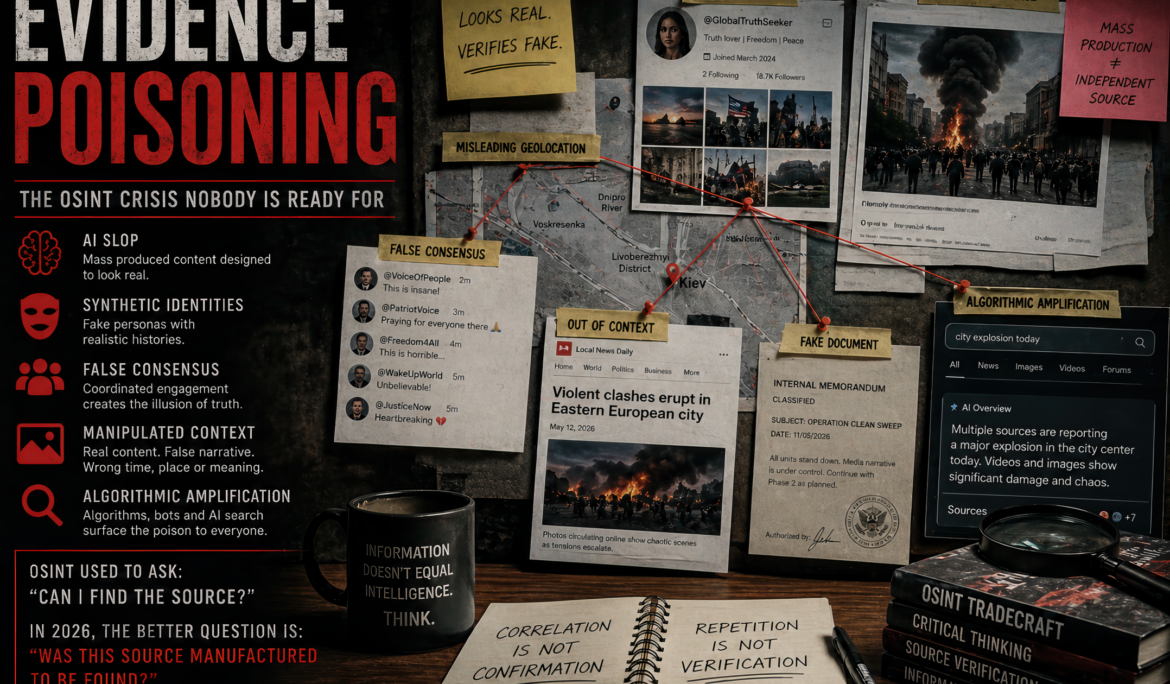
Evidence Poisoning: The OSINT Crisis Nobody Is Ready For
Over the past decade and a half, we have been confronted with chemical warfare, assassination operations involving nerve agents and lethal animal toxins, and accusations of illicit biological research activities, all indicative of serious breaches of the Chemical Weapons Convention (CWC) and the Biological and Toxin Weapons Convention (BTWC). The incidents were accompanied by information warfare, typically of the type in which one side claimed the allegations were fake and the other side argued their veracity. A characteristic of this information warfare is that the same antagonists – government outlets, organisations and institutions, individual scientists or academics, and motley groups …

A very thin gruel, indeed
On 23 September, President Donald Trump addressed the UN General Assembly (UNGA). In an unexpected move, he called on the world’s nations to halt the development of biological weapons (BW). Referring to the COVID pandemic five years earlier and reckless laboratory experiments, he announced a US-led international effort to strengthen the Biological and Toxin Weapons Convention (BTWC), and proposed an artificial intelligence (AI)-driven verification system. After more than two decades of opposition, his speech seemed to indicate that Washington might embrace verification machinery for the BTWC. However, the less than two minutes he devoted to the topic contained little substance …

Biological weapons: Kazakhstan’s proposal for an international organisation five years later
On 23 September 2020, amid the Severe Acute Respiratory Syndrome Coronavirus 2 (SARS-CoV-2) pandemic, President Kassym-Jomart Tokayev of Kazakhstan addressed the UN General Assembly (UNGA) and advanced the establishment of an International Agency for Biosafety (IABS). Just over five years later, on 14 October 2025, the Kazakh Ministry for Foreign Affairs organised a one-day seminar in Almaty. Its title: 50th Anniversary of the BTWC: From Commitment to Action – the International Agency for Biological Security (IABS) initiative. The timing of the seminar was perfect. At the start of the month, the Chairperson of the Working Group (WG) on the Strengthening …

Challenges to the BTWC and CWC and questions for the Pugwash CBW Working Group
The Pugwash Chemical and Biological Weapons Working Group (CBW WG) held its first virtual event on 3 October 2025. The primary objective was to gather feedback on potential topics for the WG’s development, thereby gaining a deeper understanding of the WG’s specific role in the current academic and civil society landscape. Registrants completed a small questionnaire covering both topics. Seventy-five persons from all continents, including the Middle East and North Africa, participated. Summary Jean Pascal Zanders and Lizeka Tandwa opened the meeting. Götz Neuneck, Chairperson of the Council, introduced Pugwash, its history, current activities and working methodologies. Richard Guthrie (Pugwash …