Enhancing BTWC Compliance – Workshop Report
Jean Pascal ZANDERS Senior Research Associate Fondation pour la recherche stratégique WORKSHOP REPORT Enhancing compliance of the BTWC through national implementation and other means Brussels, 24 April 2014 (PDF version) I. Participation The workshop, organised by the EU Non-Proliferation Consortium in cooperation with the European External Action Service (EEAS), was held in Brussels on 24 April 2014. Its purpose was to have an in-depth brainstorming session on the future of the Biological and Toxin Weapons Convention (BTWC) with officials from EU Member States. The event was the 1st Ad Hoc Seminar to be organised under the new Council Decision 014/129/CFSP …
Gradually making sense of Syria’s CW declarations
Since my last update on the elimination of Syria’s chemical weapon (CW) capacities in May, all precursor chemicals have finally left the country. Some have been shipped to facilities in Finland and the USA, where they are in the process of being destroyed. The United Kingdom meanwhile completed the destruction of 190 tonnes of chemicals at an incinerator in Ellesmere Port. As of 7 August, 74.2% of Syria’s entire stockpile of chemical warfare agent precursors have been destroyed. Other chemicals are meanwhile being neutralised on board of the US vessel Cape Ray in the Mediterranean, and the resulting reaction mass …
Threat posed by Islamic State’s capture of Iraq’s Muthanna CW site
In a letter dated 7 July 2014 Iraqi Ambassador to the United Nations Mohamed Ali Alhakim notified UN Secretary-General Ban Ki-moon that ‘armed terrorist groups’ had entered the Muthanna complex on 11 June. The next morning a project manager observed them looting of some equipment via the camera surveillance system before the ‘terrorists’ disabled it. The document, as cited by the Associated Press, explicitly referred to the capture of bunkers 13 and 41, two locations still holding chemical weapons (CW) so severely damaged during the 1991 war to liberate Kuwait that until today they could not be disposed of in …
Üzümcü: "After Syria I do not see any country able to use chemical weapons anymore"
The last day of October, a sunny Friday in The Hague, I met with Ambassador Ahmet Üzümcü to reflect on the previous year and a half, during which the civil war in Syria suddenly thrust the Organisation for the Prohibition of Chemical Weapons (OPCW) into the spotlight. In March 2013 United Nations Secretary-General Ban Ki-moon requested technical assistance from the OPCW to investigate alleged chemical weapon (CW) use in the war-torn country. Six months later, after a serious incident in which sarin nerve agent killed and poisoned many hundreds of people in the Ghouta district of Damascus, Syria unexpectedly joined …
Syria’s CW disarmament: spill-over effects for Middle East?
Using the Momentum of Syria’s Chemical Weapons Dismantlement and Identifying Spill-Over Potentials Discussion note prepared for: Academic Peace Orchestra – Middle East (APOME), Tackling the Middle East WMD/DVs Arsenals in the Context of Military Asymmetries Towards Zonal Disarmament, Berlin, 11–12 March 2015 Introduction Syria acceded to the Chemical Weapons Convention (CWC) on 14 September 2013 and formally became a state party on 14 October. This was the outcome of a framework agreement on the elimination of Syria’s chemical warfare capacities between Russia and the United States reached in Geneva on 14 September. This accord averted military strikes by France, the United …
The future of confidence building in biological arms control
[Presentation at the civil society event commemorating the 40th anniversary of the entry into force of the Biological and Toxin Weapons Convention, 30 March 2015.] Distinguished representatives, colleagues, let me first stress that I am very honoured to be invited to contribute to this event. May I thank the organisers and sponsors very much, In the next 15 minutes I would like to draw a picture of possible developments of confidence building in the BWC. To that end I will briefly introduce the term confidence and its sources, and will then mainly concentrate on transparency as one of these sources. …
BTWC Meeting 2017: NGO statement
Joint NGO Statement to the Biological Weapons Convention (BWC) Meeting of States Parties Geneva, 5 December 2017 Mr Chair, Distinguished Representatives: Thank you for the opportunity to speak before you today. I am pleased to have taken over the role as NGO Coordinator from Graham Pearson who so ably carried out this task for 20 years. This year, the NGO community offers a joint statement, to more powerfully focus our key messages to you. I am speaking on behalf of 19 organizations and 40 individuals, the full list of which is attached to the written copy of this statement. The …
The OPCW and the industry: Are there any obligations?
Opinion by Prof Benjamin Ruiz Loyola, Faculty of Chemistry, National Autonomous University of Mexico (UNAM) and Member of the OPCW Advisory Board on Education and Outreach (ABEO) The Organization for the Prohibition of Chemical Weapons (OPCW) is an organization devoted to the destruction of all the chemical weapons over our world, to prevent the reemergence of this weapons of mass destruction and to prevent the abuse or misuse of dual-use chemical compounds or technologies. This activities of the OPCW are determined by the Chemical Weapons Convention (CWC), an international agreement signed and ratified by 192 countries (and one that in …
Internationalisation of Syria’s chemical weapon stockpile?
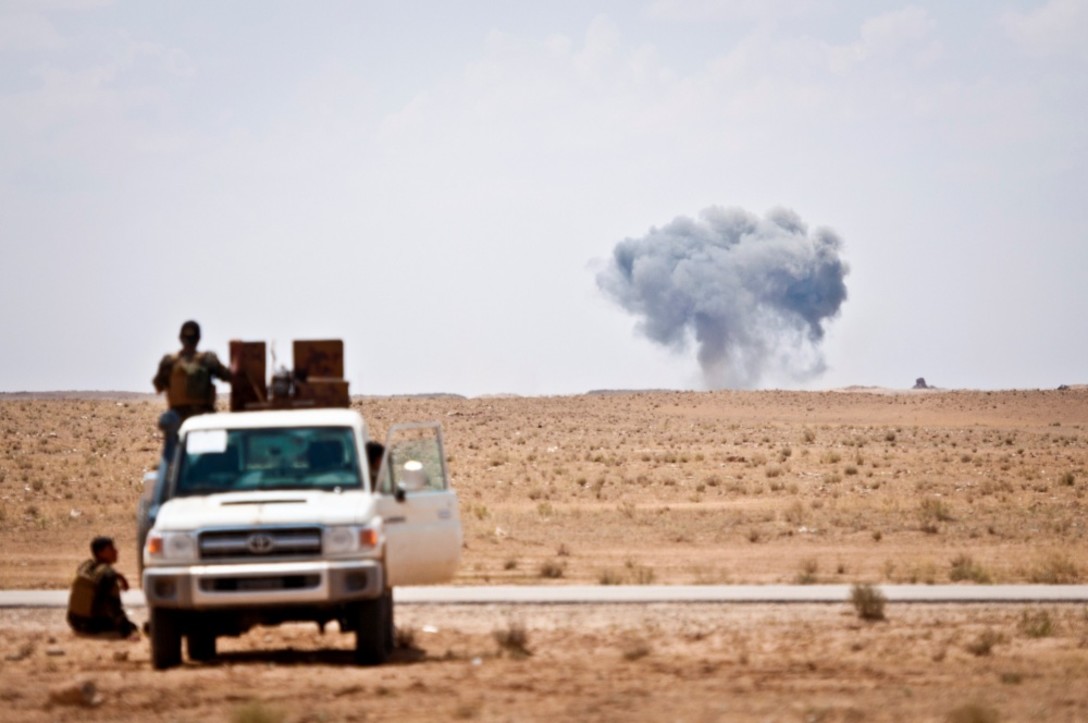
The idea of internationalising Syria’s stockpile is doable, but what would it take? Some first thoughts to launch an international and constructive discussion by Jean Pascal Zanders and Ralf Trapp Yesterday, Russian Foreign Minister Sergey Lavrov launched an idea—in the meantime accepted by Syria—based on an offhand remark by US Secretary of State that Syria might avoid punitive military strikes if it were to ‘turn over every single bit of his chemical weapons to the international community in the next week’. He said: We are calling on the Syrian authorities not only agree on putting chemical weapons storages under international …