
Education for disarmament and non-proliferation
Building a culture of responsibility: education for disarmament and non-proliferation Journal of Strategic Trade Control, Special Issue, Vol. 2 (September 2024) I am honoured to have been invited to contribute to the Special Issue of the Journal of Strategic Trade Control (JoSTC) focussed on Training programs to counter current and emerging biological and chemical proliferation risks: themes, practices, and lessons learnt. Between January 2018 and December 2023, I was involved in the design, development and implementation of a master’s course on dual-use technology transfer control, which was implemented in Central Asia through the International Science and Technology Centre (ISTC) and …
Non-proliferation assistance: A proliferation of national focal points?
On 9 December I attended a one-day seminar entitled Assistance and capacity-building in the context of UN Security Council Resolution 1540, Disarmament and Non-Proliferation in Addis Ababa, Ethiopia. It took place in one of the committee rooms in the old building of the African Union Commission. It had none of the trappings of many modern high-tech venues, but offered all amenities one can wish for during a day-long meeting: an electricity plug under the desk (a civilisational advance that has yet to reach the main room for meetings of the Biological and Toxin Weapons Convention, or BTWC, at the United …

Contributions from the 1925 Geneva Protocol to the BTWC
(Speaking Points at the “50th anniversary of the entry into force of the Biological Weapons Convention” event held at the Palais des Nations, Geneva, 26 March 2025) Before the Geneva Protocol Evolution of the ‘poison concept’ Starting in the early 19th century, semantic separation of disease from the poison concept because of evolving medical practice and growing acceptance of the germ theory. Semantic specialisation between poison (toxic substances from nature) and asphyxiating and deleterious gases (products from science and industrialisation). 1899 Hague Peace Conference Semantic bifurcation between poison and asphyxiating gases is a reality with legal consequences. Prohibition of the …

Biological Weapons Disarmament Reaches 50
Fifty years ago, on 26 March 1975, the Convention on the Prohibition of the Development, Production and Stockpiling of Bacteriological (Biological) and Toxin Weapons and on their Destruction entered into force. The Biological and Toxin Weapons Convention (BTWC) was the first multilateral treaty to outlaw a discrete weaponry category comprehensively. No party to the treaty can develop, produce, otherwise acquire, or retain biological and toxin weapons. Nor can state parties use such weapons in any way or under any circumstances. On its 50th anniversary, 188 states are party to the BTWC. Only nine are on the outside. Four signed the …

Aiming for a future verification system for the BTWC
This posting is based on comments made during a panel on ‘The Future of Biological Weapons’ at the annual conference of the EU Non-Proliferation and Disarmament Consortium, held in Brussels on 13 November 2024. Previously 1996 was a year of optimism. Held between the opening for signature (January 1993) and entry into force (April 1997) of the Chemical Weapons Convention (CWC), the Fourth Review Conference of the Biological and Toxin Weapons Convention (BTWC) decided to give the Ad Hoc Group (AHG) a mandate to negotiate a legally binding protocol to equip the BTWC with, among other things, a verification …

Chloropicrin and its alleged use in the Ukrainian war (part 3)
The first instalment of this four-part blog series reviewed the allegations of Russian chemical weapon (CW) use in the Ukrainian war from its start in 2014 until the present. At the meeting of the Executive Council of the Organisation for the Prohibition of Chemical Weapons (OPCW) in March 2024, the Ukrainian delegate reported 1,060 incidents since the Russian invasion in February 2022. More recently, Ukraine claimed in a note verbale to the OPCW dated 13 June that it had recorded a total of 2,968 cases of Russian use of riot control agents (RCAs) between 15 February 2023 and 25 April …
The Australia Group and the prevention of the re-emergence of chemical and biological weapons
The European Union Non-Proliferation and Disarmament Consortium held its 11th Consultative Meeting in Brussels on 15 and 16 September 2022. Its central theme was the “Topicality of multilateral export control regimes”. On the second day, one of the four breakout sessions addressed the Australia Group, an informal arrangement coordinating technology transfer controls relating to dual-use agents and equipment with potential relevance for developing and producing chemical and biological weapons. Introducers were Ms Esmée de Bruin (Netherlands), Dr Mónica Chinchilla (Spain) and Ms Élisande Nexon, PharmD (France). I had the honour of moderating the session. The three speakers have different backgrounds, …
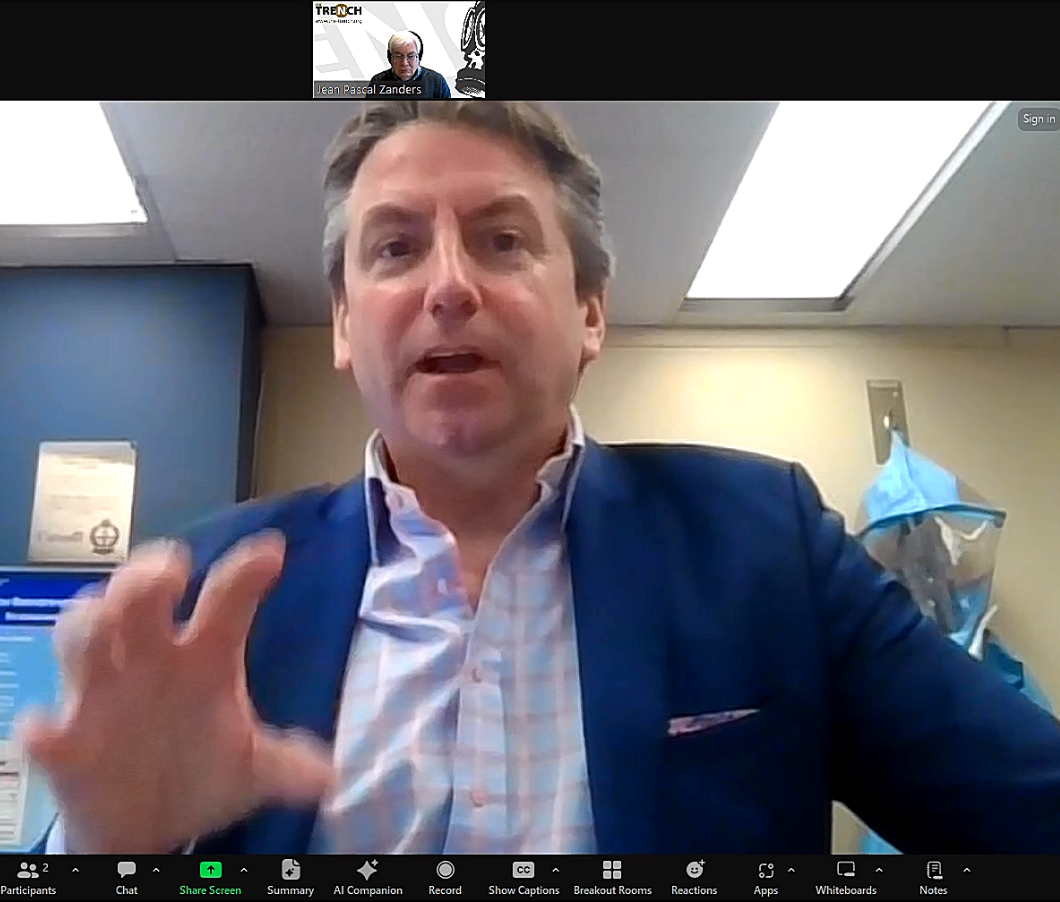
Response is failure in the primary mission of preventing CBW
The Global Partnership against the Spread of Materials and Weapons of Mass Destruction has now been around for over two decades. In the wake of the terrorist attacks against the US in September 2001, it started out as an effort to mobilise the resources of the G8 members to prevent terrorist acquisition of nuclear, biological and chemical weapons, and related materials. The weapons, technologies and skills available from the former Soviet Union presented a significant proliferation risk, which the US was already addressing through the Cooperative Threat Reduction (CTR) programme. Now comprising 31 members, the Global Partnership (GP) played a …