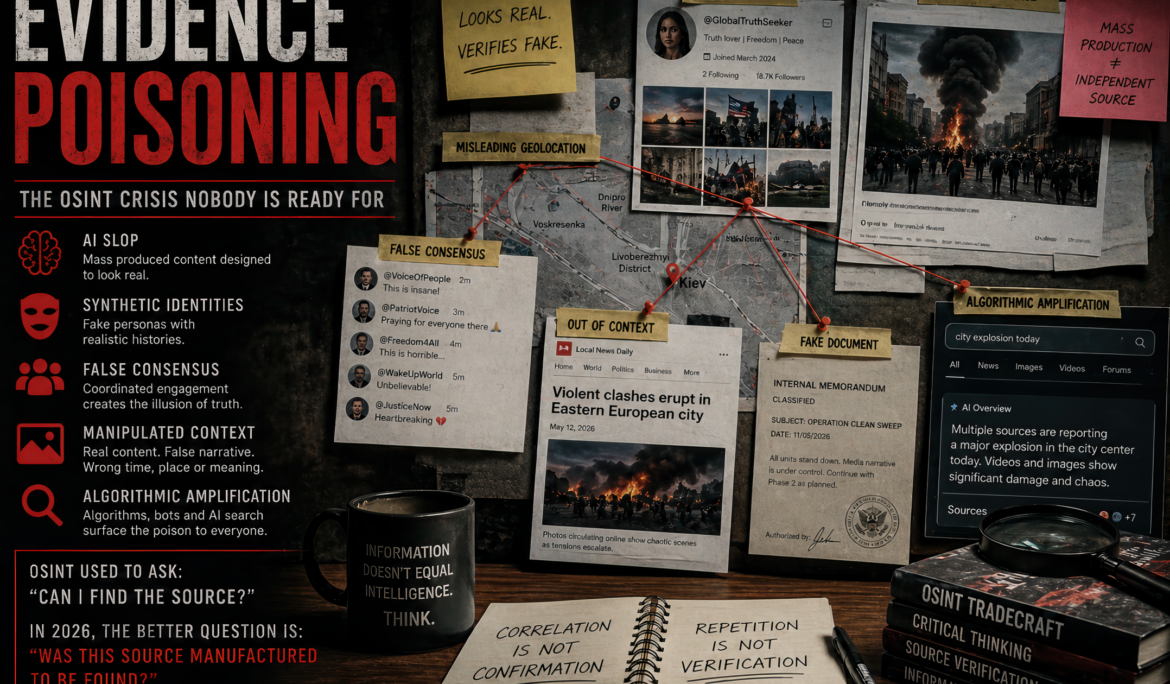
Evidence Poisoning: The OSINT Crisis Nobody Is Ready For
Over the past decade and a half, we have been confronted with chemical warfare, assassination operations involving nerve agents and lethal animal toxins, and accusations of illicit biological research activities, all indicative of serious breaches of the Chemical Weapons Convention (CWC) and the Biological and Toxin Weapons Convention (BTWC). The incidents were accompanied by information warfare, typically of the type in which one side claimed the allegations were fake and the other side argued their veracity. A characteristic of this information warfare is that the same antagonists – government outlets, organisations and institutions, individual scientists or academics, and motley groups …

Challenges to the BTWC and CWC and questions for the Pugwash CBW Working Group
The Pugwash Chemical and Biological Weapons Working Group (CBW WG) held its first virtual event on 3 October 2025. The primary objective was to gather feedback on potential topics for the WG’s development, thereby gaining a deeper understanding of the WG’s specific role in the current academic and civil society landscape. Registrants completed a small questionnaire covering both topics. Seventy-five persons from all continents, including the Middle East and North Africa, participated. Summary Jean Pascal Zanders and Lizeka Tandwa opened the meeting. Götz Neuneck, Chairperson of the Council, introduced Pugwash, its history, current activities and working methodologies. Richard Guthrie (Pugwash …
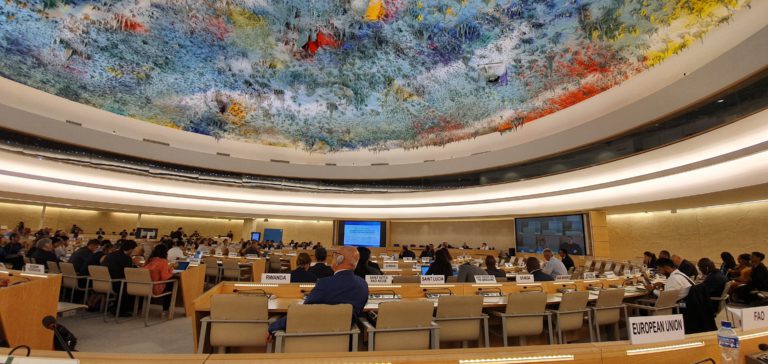
Relaunching the Pugwash CBW Working Group (Event)
Pugwash Conferences on Science and World Affairs Working Group on Chemical and Biological Weapons Relaunching the Pugwash CBW Working Group Date: Friday, 3 October 2025. Time: UTC 13:00 – 14:30 (15:00 – 16:30 CEST). Duration: 60 – 90 minutes Place: Zoom virtual meeting (Registration required) Agenda: Welcome & brief introduction, Jean Pascal Zanders and Lizeka Tandwa, CBW WG Co-coordinators Welcome/Introduction to Pugwash by Götz Neuneck, Chair of the Pugwash Council Introduction to the CBW WG and challenges in the CBW area Status of the CBW regime Biological and toxin weapons, Richard Guthrie Chemical weapons, Mina Rozei Discussion What unique …

In the long shadow of Halabja
A report from Pugwash Iraq’s first international conference Thirty-seven years ago, on 16 March 1988, Iraq’s military forces hit the Kurdish town of Halabja with artillery rockets and napalm bombs, followed by sustained bombing runs releasing chemical weapons. Between three and five thousand people perished, and many thousands more suffered life-altering injuries. Almost all civilians, an estimated three-quarters of them women and children. Genetic defects resulting from their exposure to mustard and nerve agents meant that even today, their offspring too have inherited these chromosomal anomalies, making them transgenerational victims of chemical warfare. To remember the massacre, Pugwash Iraq organised …

Chloropicrin and its alleged use in the Ukrainian war (part 3)
The first instalment of this four-part blog series reviewed the allegations of Russian chemical weapon (CW) use in the Ukrainian war from its start in 2014 until the present. At the meeting of the Executive Council of the Organisation for the Prohibition of Chemical Weapons (OPCW) in March 2024, the Ukrainian delegate reported 1,060 incidents since the Russian invasion in February 2022. More recently, Ukraine claimed in a note verbale to the OPCW dated 13 June that it had recorded a total of 2,968 cases of Russian use of riot control agents (RCAs) between 15 February 2023 and 25 April …
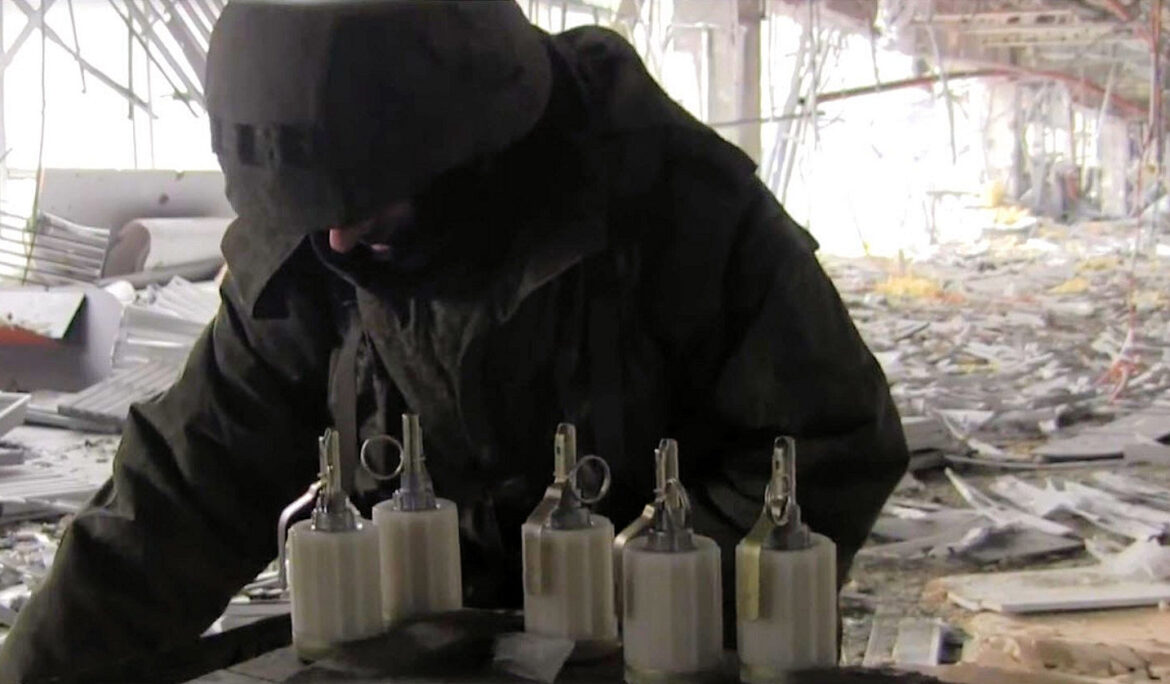
Chloropicrin and its alleged use in the Ukrainian war (Part 1)
On 1 May, the United States formally accused Russia of using ‘the chemical weapon chloropicrin against Ukrainian forces in violation of the Chemical Weapons Convention (CWC)’. It added: ‘We make this determination in addition to our assessment that Russia has used riot control agents as a method of warfare in Ukraine, also in violation of the CWC. The use of such chemicals is not an isolated incident and is probably driven by Russian forces’ desire to dislodge Ukrainian forces from fortified positions and achieve tactical gains on the battlefield.’ Allegations of chemical weapons (CW) use first appeared after the start …

Chloropicrin and its alleged use in the Ukrainian war (part 2)
The first of four parts in this blog series reviewed the allegations of Russian chemical weapon (CW) use in the Ukrainian war from its start in 2014 until today. The Ukrainian delegate reported 1,060 incidents since the Russian invasion in February 2022 at the meeting of the Executive Council of the Organisation for the Prohibition of Chemical Weapons (OPCW) in March 2024. On 23 May, the Wall Street Journal quoted Ukrainian sources that the number of CW incidents was quickly approaching the 2,000 mark: As of May 3, the Support Forces have confirmed 1,891 such attacks since they began tracking …
The Australia Group and the prevention of the re-emergence of chemical and biological weapons
The European Union Non-Proliferation and Disarmament Consortium held its 11th Consultative Meeting in Brussels on 15 and 16 September 2022. Its central theme was the “Topicality of multilateral export control regimes”. On the second day, one of the four breakout sessions addressed the Australia Group, an informal arrangement coordinating technology transfer controls relating to dual-use agents and equipment with potential relevance for developing and producing chemical and biological weapons. Introducers were Ms Esmée de Bruin (Netherlands), Dr Mónica Chinchilla (Spain) and Ms Élisande Nexon, PharmD (France). I had the honour of moderating the session. The three speakers have different backgrounds, …
Response is failure in the primary mission of preventing CBW
The Global Partnership against the Spread of Materials and Weapons of Mass Destruction has now been around for over two decades. In the wake of the terrorist attacks against the US in September 2001, it started out as an effort to mobilise the resources of the G8 members to prevent terrorist acquisition of nuclear, biological and chemical weapons, and related materials. The weapons, technologies and skills available from the former Soviet Union presented a significant proliferation risk, which the US was already addressing through the Cooperative Threat Reduction (CTR) programme. Now comprising 31 members, the Global Partnership (GP) played a …
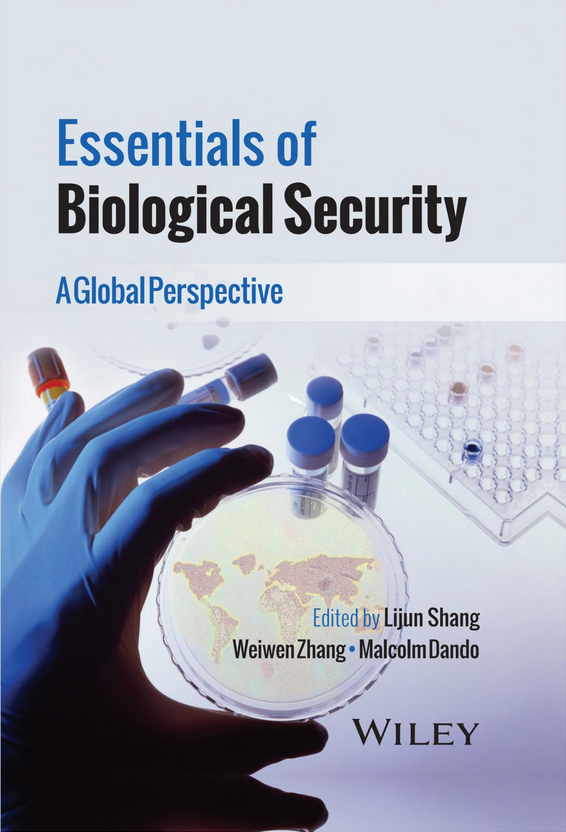
Falling between the Cracks and by the Sides
Next month, Essentials of Biological Security: A Global Perspective edited by Lijun Shang, Weiwen Zhang and Malcolm Dando will be published. The book offers an introduction to biological security and the chemical and biological weapons (CBW) threat spectrum and explores the history of biological weapons from antiquity to modern day. Its core comprises expert analyses of the Biological and Toxin Weapons Convention and other relevant international agreements and organisations and practical discussions of dual-use technologies and how to minimise their risk. (For a preview of the book contents, click here.) I contributed the chapter Falling between the Cracks and by …