A Middle East Zone Free from Non-conventional Weapons (3)
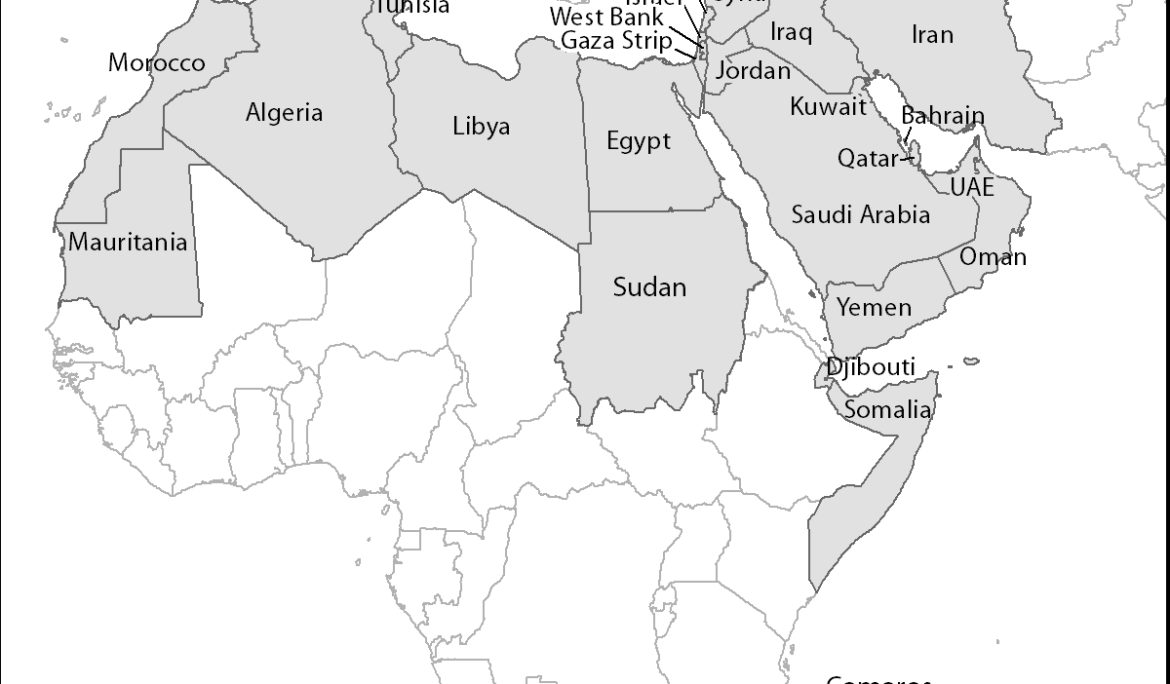
Part 3: Defining the Middle East, a loaded question In November 2019 a conference at the United Nations in New York (report here) marked a fresh round of diplomatic efforts to eliminate non-conventional arms – essentially nuclear weapons, and to a lesser extent chemical and biological weapons (CBW) – from the military arsenals in the Middle East. As indicated in the second part of this series, participants in the new conference series depart from the definition of the Middle East used by the International Atomic Energy Agency (IAEA). At the UN Institute for Disarmament Research (UNIDIR) seminar ‘The Middle …
A Middle East Zone Free from Non-conventional Weapons (2)
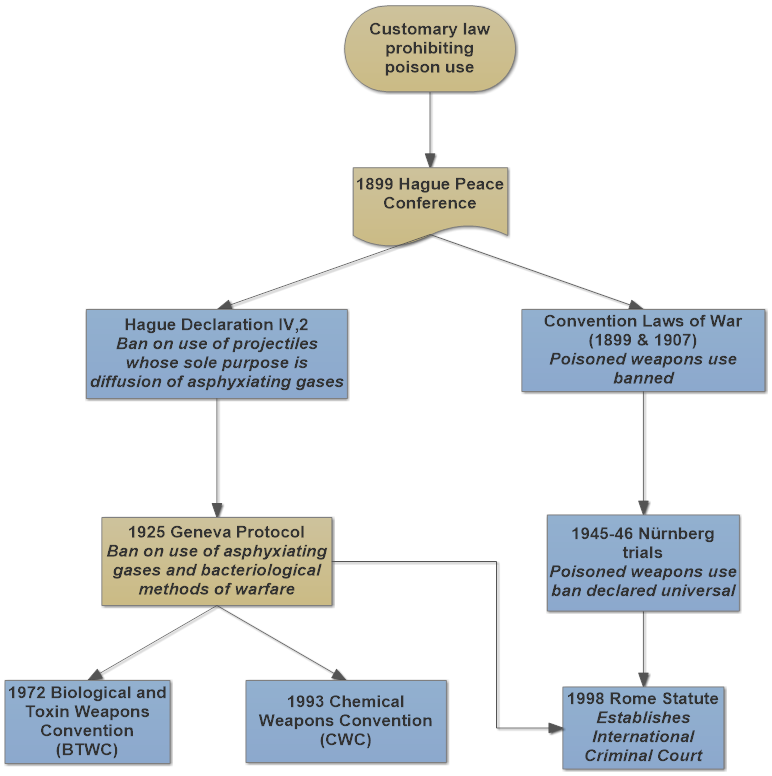
Part 2: Treaties governing chemical and biological weapons In November 2019 a conference at the United Nations in New York marked a fresh round of diplomatic efforts to eliminate non-conventional arms – essentially nuclear weapons, and to a lesser extent chemical and biological weapons (CBW) – from the military arsenals in the Middle East. This article is the second in a series of blog postings exploring the opportunities and challenges to ensure that the regional risks of CBW threats and use – chemical weapons (CW) were and, as I am writing, are part of conflicts in the Middle East …
A Middle East Zone Free from Non-conventional Weapons (1)
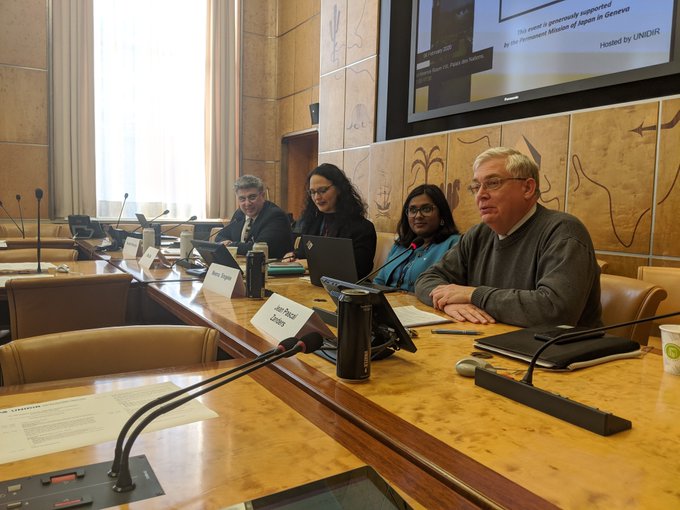
Part 1: A new process to disarm the Middle East In November 2019 a conference at the United Nations in New York marked a fresh round of diplomatic efforts to eliminate non-conventional arms – essentially nuclear weapons, and to a lesser extent chemical and biological weapons (CBW) – from the military arsenals in the Middle East. The previous initiative died in 2015 as the review conference (RevCon) of the 1968 Nuclear Non-Proliferation Treaty (NPT) failed to agree on a consensus document. The new series of annual meetings takes place outside the NPT RevCon cycle, which consists of a quinquennial …
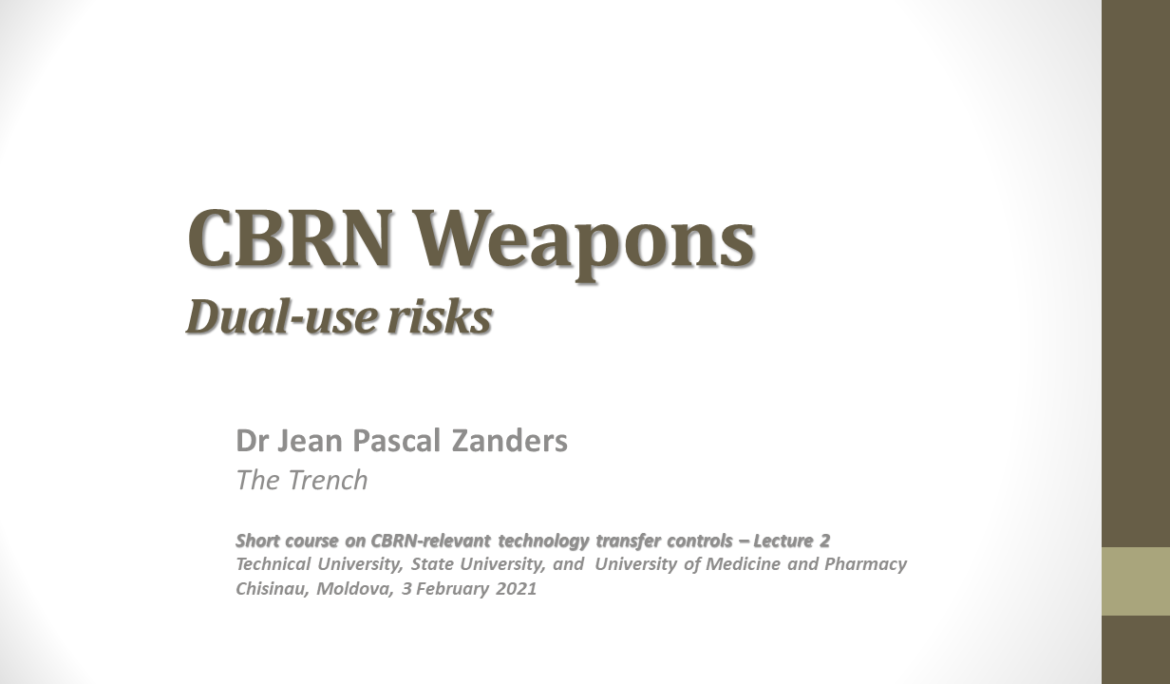
Education on CBRN-relevant dual-use technology transfers in Moldova
The Science and Technology Centre in Ukraine (STCU) just published a summary of the short virtual course on CBRN-relevant dual-use technology transfers I taught in Moldova on 2 – 5 February. The course was another step in the project to design, develop and teach a full master’s course on export controls and technology governance for the GUAM countries (Georgia, Ukraine, Azerbaijan, and Moldova). As I described in a previous blog post, the educational initiative forms part of a larger Targeted Initiative funded by the European Commission that is implemented through the STCU and International Science and technology Centre (ISTC) in …
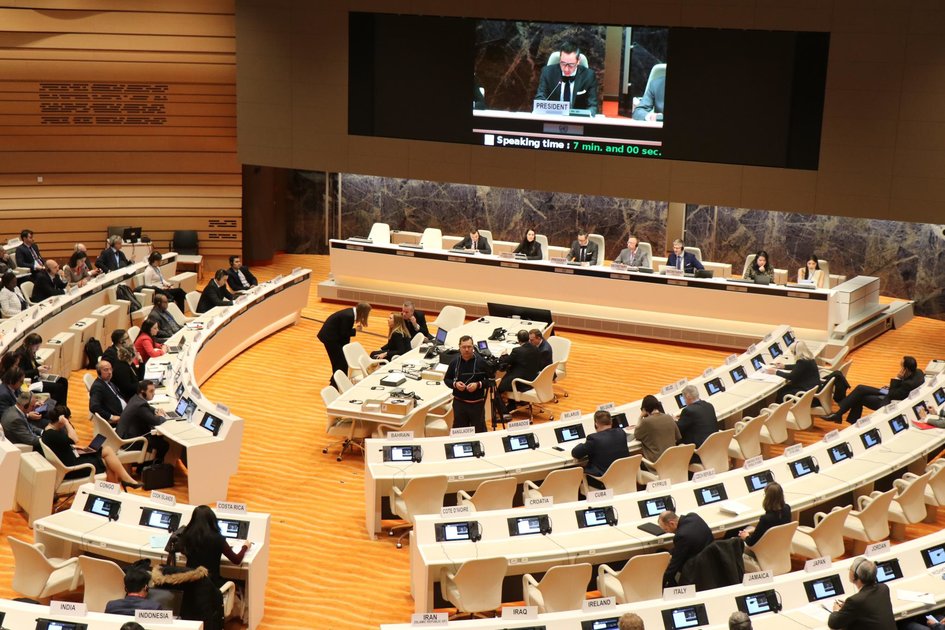
COVID-19 pushes BTWC Review Conference into 2022
As noted in the blog posting of 29 November, COVID-19 has seriously interfered with the meeting agendas for the Biological and Toxin Weapons Convention (BTWC) and the Chemical Weapons Convention (CWC). A new schedule is emerging for the BTWC while it appears possible that the second part of last year’s CWC Conference of States Parties may take place later than April. BTWC meetings for 2021 The Chairperson of the 2020 Meeting of States Parties (MSP), Ambassador Cleopa Mailu of Kenya, has notified delegations that the Meetings of Experts (MX) will now be held one year after the originally planned dates, …
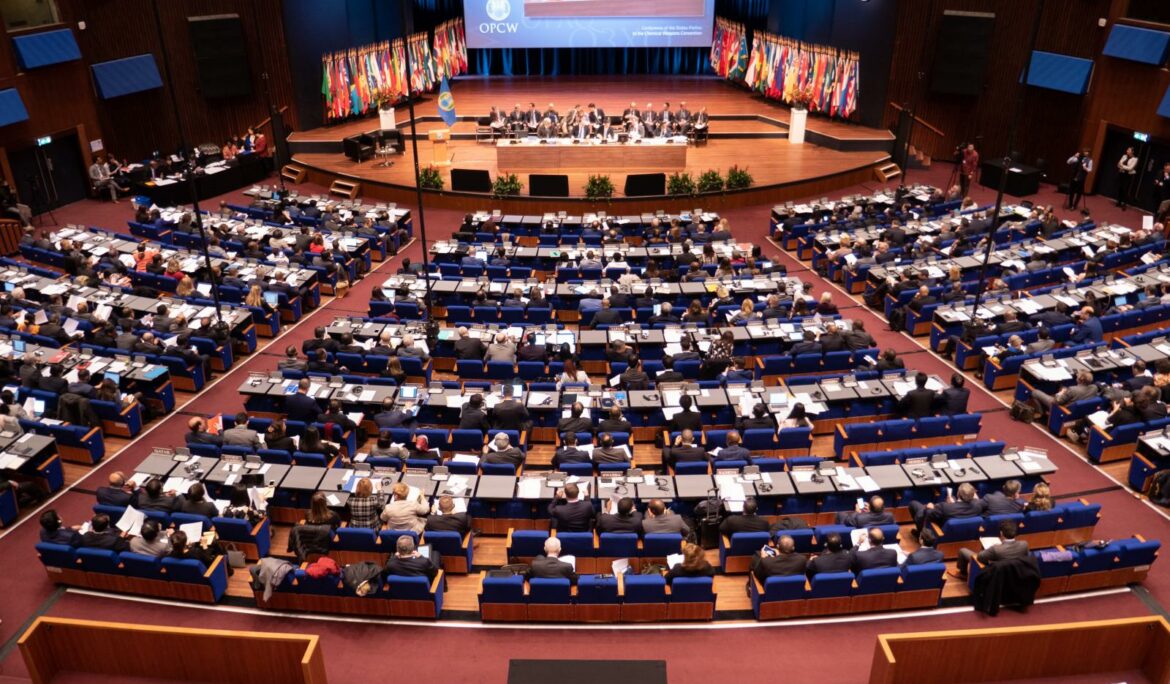
COVID-19 interferes with CWC and BTWC meeting schedules
COVID-19 is messing up the diplomatic disarmament and arms control agendas. On 27 March Ambassador Gustavo Zlauvinen from Argentina announced as President-Designate the postponement of the 10th Review Conference of the Nuclear Non-Proliferation Treaty (NPT). Initially scheduled for 27 April – 22 May 2020, it was to take place by April 2021. The deadline was moved up to August. However, because of the United Nation’s original schedule of meetings for 2021 combined with the many rescheduled meetings of this year, the only possible opening in the agenda was an impractical slot from 4 to 29 January. The pandemic’s resurgence in …
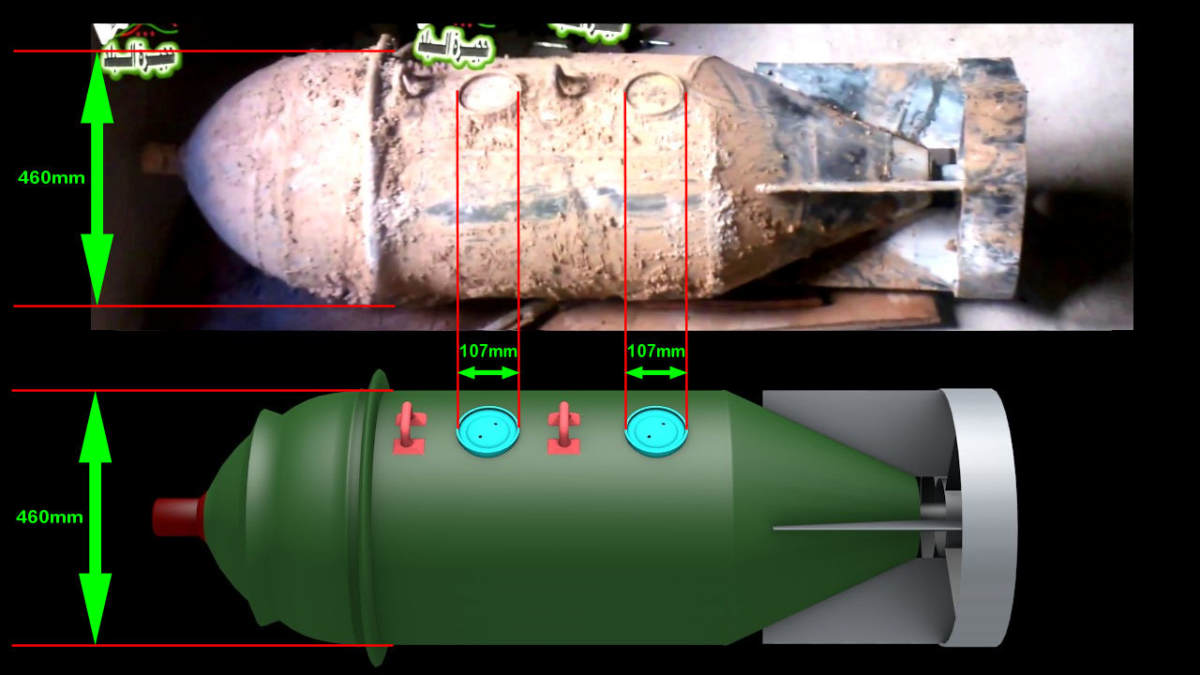
Syria stands formally accused of violating the Chemical Weapons Convention
The Executive Council of the Organisation for the Prohibition of Chemical Weapons (OPCW) held its 94th session from 7–10 July. Prominent on the agenda was the determination by the Investigation and Identification Team (IIT) that ‘there are reasonable grounds to believe’ that Syrian government forces bear responsibility for several chemical weapon (CW) attacks at the end of March 2017. The finding is the first time that the Technical Secretariat of the OPCW has formally charged a state party to the Chemical Weapons Convention (CWC) with violating Article I, para. 1(b) to never under any circumstances use CW. The accusation is …
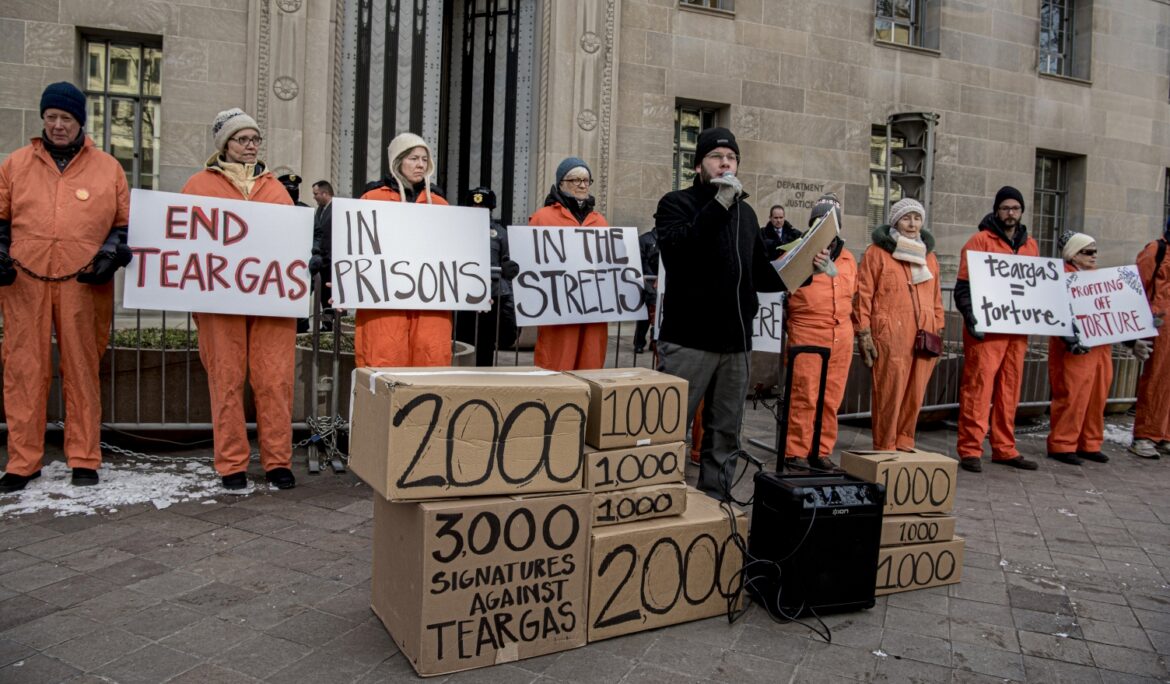
‘Tear-gas’: authorised at home, banned in war? Not so for the USA
‘Tear-gas’ may come to symbolise the Trump Administration’s heavy-handed response to the popular reaction against the killing of George Floyd, a middle-aged black man, by a white police officer. The President’s rolling thunder of insensitive, divisive tweets extolling law and order and deriding the legitimate demands by the Black Lives Matter movement has contributed to irresponsible use of force against essentially peaceful protesters, onlookers, and members of the press. Police brutality combined with widespread lack of accountability – unless a person gets killed or an incident is captured on media – has led to multiple types of excesses. When President …
Palestine: From a ‘will-be’ party to the CWC to a ‘would-have-been’?
Something really remarkable happened in the first two weeks of 2018. On 2 January, quite out of the blue came the notification by UN Secretary-General António Guterres that the State of Palestine had deposited its instrument of accession to the Chemical Weapons Convention (CWC). It was to become the 193rd state party on 28 January, thirty days after having submitted the document (29 December). Indeed, ‘was’. Guterres formally informed UN members on 11 January that Palestine had withdrawn its instrument of accession three days earlier. States withdrawing from a disarmament or arms control treaty is extremely rare. But it does …
Preparing the 4th CWC Review Conference: Education & Outreach
Role of education and outreach in the prevention of the re-emergence of chemical weapons For consideration by the Open-Ended Working Group preparing the Fourth Review Conference of the Chemical Weapons Convention at its ninth meeting Dr Jean Pascal Zanders Chairperson OPCW Advisory Board on Education and Outreach (ABEO) 30 May 2018 [PDF Version] The Advisory Board on Education and Outreach (ABEO) is a subsidiary organ of the Organisation for the Prohibition of Chemical Weapons (OPCW). Its members, together and individually, represent a wide range of education and outreach (E&O) expertise and experience. Besides strategic and practical advice to the OPCW …