A Nobel Peace Prize for Disarmament
Today Syria becomes the 190th party to the 1993 Chemical Weapons Convention (CWC). In the 16 years since entry into force on 29 April 1997, CWC universality now equals that of the 1968 Nuclear Non-Proliferation Treaty (which entered into force on 5 March 1970). The convention extends the 1925 Geneva Protocol’s ban on chemical (and biological) warfare by also comprehensively prohibiting the development, acquisition, transfer and possession of chemical weapons (CW). Indeed, the norm against CW has become so overpowering that a relatively small chemical attack by historical standards in Ghouta (Damascus) on 21 August brought allies and foes of …
CW disarmament and constructive engagement on Syria
Hearing before the Committee on Political Affairs and Democracy of the Parliamentary Assembly of the Council of Europe (PACE) Strasbourg, 30 September 2013 …
Internationalisation of Syria’s chemical weapon stockpile?
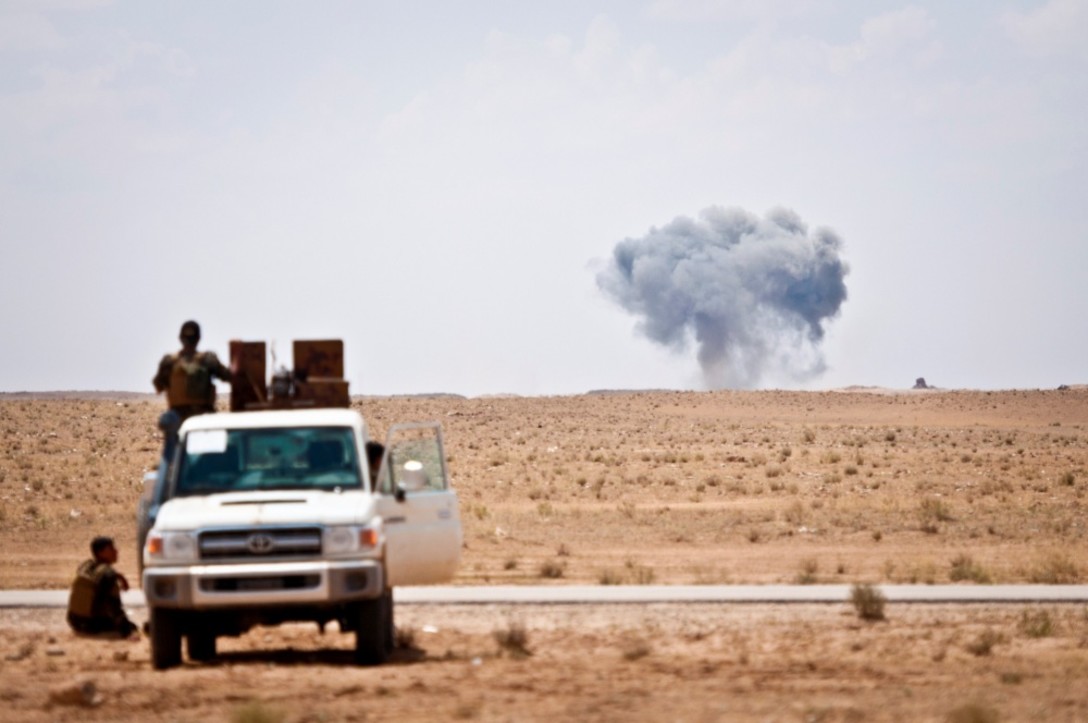
The idea of internationalising Syria’s stockpile is doable, but what would it take? Some first thoughts to launch an international and constructive discussion by Jean Pascal Zanders and Ralf Trapp Yesterday, Russian Foreign Minister Sergey Lavrov launched an idea—in the meantime accepted by Syria—based on an offhand remark by US Secretary of State that Syria might avoid punitive military strikes if it were to ‘turn over every single bit of his chemical weapons to the international community in the next week’. He said: We are calling on the Syrian authorities not only agree on putting chemical weapons storages under international …
Syria: incendiary weapon used against civilians
The BBC carries very graphic footage of the aftermath of an incendiary bomb dropped by a fighter jet on to a school playground in the north of Syria. Scores of children have napalm-like burns over their bodies. An incendiary weapon is not a chemical weapon as defined by the Chemical Weapons Convention, because it harms humans through heat rather than the direct effects of poisoning. They include weapons such as napalm or white phosphorus. Incendiary weapons are banned by the Convention on Certain Conventional Weapons (also known as the Inhumane Weapons Convention), Protocol III. Article I defines an incendiary weapon …
Syria: Should UN Investigators Pass Judgement?
With the horrific events of the past two days in several Damascus suburbs dominating the airwaves and press reports, the ability to establish rough time lines of events and more detailed circumscriptions of the areas affected allows more and more to conclude that several more or less simultaneous chemical weapon (CW) attacks took place in the very early morning hours of 21 August. While the number of casualties — affected survivors and fatalities — is impossible to establish right now, it is clear that scores, if not hundreds of people fell victim to some asphyxiant. Several chemical warfare agents are …
Education on CBRN-relevant dual-use technology transfers in Moldova
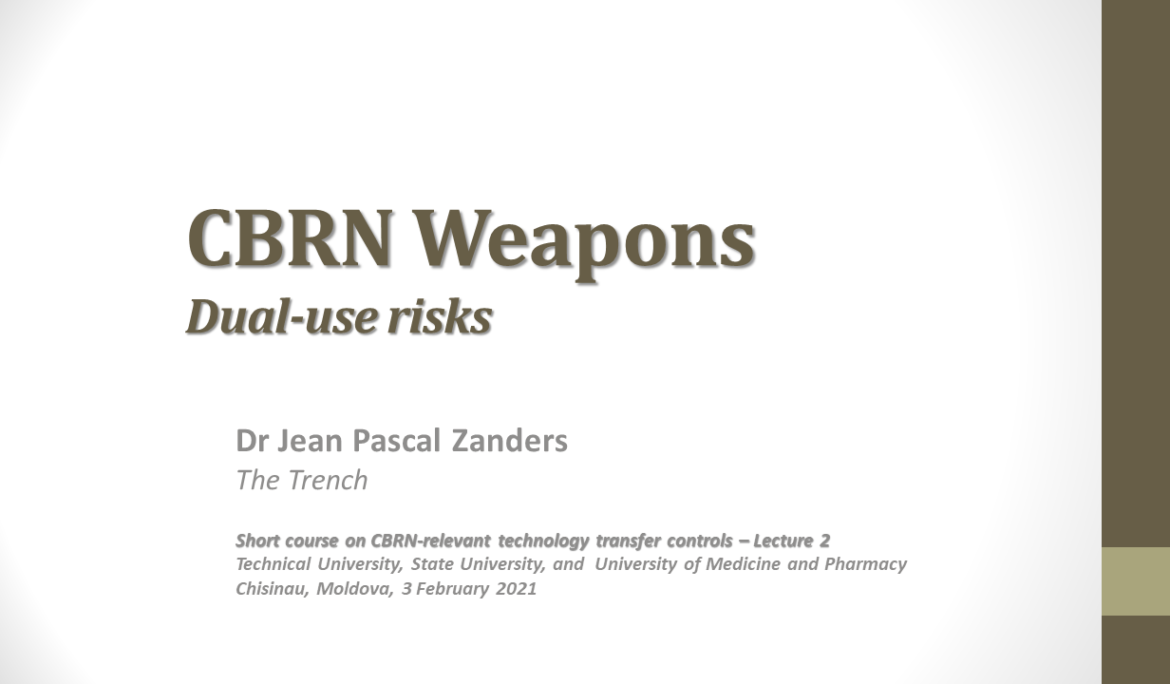
The Science and Technology Centre in Ukraine (STCU) just published a summary of the short virtual course on CBRN-relevant dual-use technology transfers I taught in Moldova on 2 – 5 February. The course was another step in the project to design, develop and teach a full master’s course on export controls and technology governance for the GUAM countries (Georgia, Ukraine, Azerbaijan, and Moldova). As I described in a previous blog post, the educational initiative forms part of a larger Targeted Initiative funded by the European Commission that is implemented through the STCU and International Science and technology Centre (ISTC) in …