

A very thin gruel, indeed
On 23 September, President Donald Trump addressed the UN General Assembly (UNGA). In an unexpected move, he called on the world’s nations to halt the development of biological weapons (BW). Referring to the COVID pandemic five years earlier and reckless laboratory experiments, he announced a US-led international effort to strengthen the Biological and Toxin Weapons Convention (BTWC), and proposed an artificial intelligence (AI)-driven verification system. After more than two decades of opposition, his speech seemed to indicate that Washington might embrace verification machinery for the BTWC. However, the less than two minutes he devoted to the topic contained little substance …

Challenges to the BTWC and CWC and questions for the Pugwash CBW Working Group
The Pugwash Chemical and Biological Weapons Working Group (CBW WG) held its first virtual event on 3 October 2025. The primary objective was to gather feedback on potential topics for the WG’s development, thereby gaining a deeper understanding of the WG’s specific role in the current academic and civil society landscape. Registrants completed a small questionnaire covering both topics. Seventy-five persons from all continents, including the Middle East and North Africa, participated. Summary Jean Pascal Zanders and Lizeka Tandwa opened the meeting. Götz Neuneck, Chairperson of the Council, introduced Pugwash, its history, current activities and working methodologies. Richard Guthrie (Pugwash …
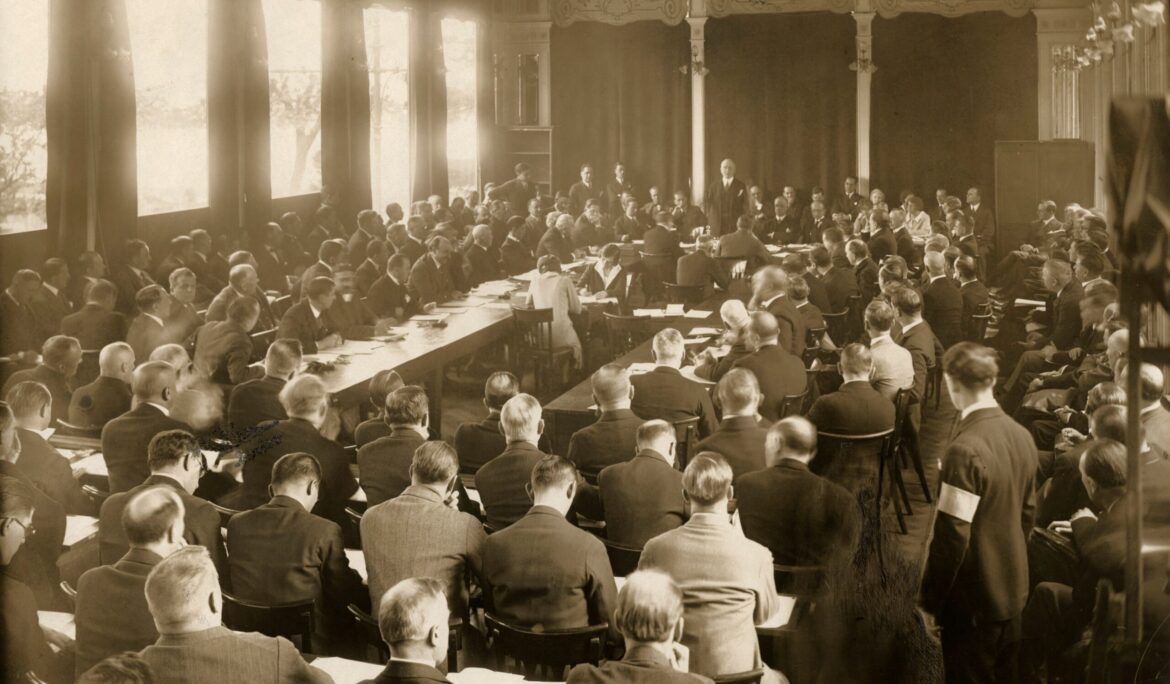
The 1925 Geneva Protocol: The League of Nations’ Only Arms Control Agreement
Historical Notes #6 (July 2025), 107pp. The origins of the Geneva Protocol and the history of its negotiation 100 years ago, including an analysis of why Poland insisted on inserting bacteriological weapons in the document. For download. On Wednesday, 17 June 1925, the Conference for the Supervision of the International Traffic in Arms successfully concluded six weeks of negotiations with three agreements. One of them was the Protocol for the Prohibition of the Use in War of Asphyxiating, Poisonous or Other Gases, and of Bacteriological Methods of Warfare. Of the forty-four participating delegations, twenty-six possessed plenipotentiary power to sign the …

In the long shadow of Halabja
A report from Pugwash Iraq’s first international conference Thirty-seven years ago, on 16 March 1988, Iraq’s military forces hit the Kurdish town of Halabja with artillery rockets and napalm bombs, followed by sustained bombing runs releasing chemical weapons. Between three and five thousand people perished, and many thousands more suffered life-altering injuries. Almost all civilians, an estimated three-quarters of them women and children. Genetic defects resulting from their exposure to mustard and nerve agents meant that even today, their offspring too have inherited these chromosomal anomalies, making them transgenerational victims of chemical warfare. To remember the massacre, Pugwash Iraq organised …

Contributions from the 1925 Geneva Protocol to the BTWC
(Speaking Points at the “50th anniversary of the entry into force of the Biological Weapons Convention” event held at the Palais des Nations, Geneva, 26 March 2025) Before the Geneva Protocol Evolution of the ‘poison concept’ Starting in the early 19th century, semantic separation of disease from the poison concept because of evolving medical practice and growing acceptance of the germ theory. Semantic specialisation between poison (toxic substances from nature) and asphyxiating and deleterious gases (products from science and industrialisation). 1899 Hague Peace Conference Semantic bifurcation between poison and asphyxiating gases is a reality with legal consequences. Prohibition of the …

The weaponisation of fentanyl
This blog posting is an extract from The Drugs Do Work… [PDF] published in CBRNe World (January 2025). Fentanyl is a powerful analgesic belonging to the class of fully synthetic opioids. Its main application is in the pain management of cancer patients and people recovering from major surgery. Paul Janssen, a Belgian pharmacologist focussing his early laboratory research on antispasmodics, anaesthetics and other pain relief medication, initially synthesised fentanyl in 1959 derived from structure–activity relationship studies of pethidine, a member of the phenylpiperidine class of fully synthetic opioids. Thirty years before, German researchers had first prepared pethidine (also known as …